
The Sodium-Potassium Balance, Explained Simply
Why these two minerals work as a pair, how the cellular pump operates in plain terms, the diet patterns that skew the ratio, and how to keep it balanced.

Sodium and potassium get talked about as opposites, but they are better understood as dance partners. They work as a pair, and the relationship between them matters more than either one alone.
The cellular pump, in plain terms
The foundation of the sodium-potassium relationship is a tiny mechanism in every cell that constantly moves these two minerals across the cell membrane. In plain language, it pushes sodium out of the cell and brings potassium in, maintaining a deliberate imbalance.
Why the body bothers:
- It sets up the electrical gradient cells depend on. By keeping more sodium outside and more potassium inside, the cell stays primed like a charged battery. That stored difference is what nerves and muscles draw on to fire.
- It enables nerve and muscle activity. When a nerve signals or a muscle contracts, sodium and potassium briefly rush across the membrane, and the pump then restores the resting arrangement. This cycle underlies signaling throughout the body, including the heartbeat.
- It contributes to fluid balance. Because water follows these minerals, the distribution of sodium and potassium helps determine where fluid sits in the body.
The takeaway is that sodium and potassium are not adversaries to be played against each other but collaborators in the same essential machinery. Their roles are complementary: sodium does its main work outside cells, potassium inside, and the pump keeps the arrangement that makes both useful. This is why they are almost always discussed together.
Diet patterns that skew the ratio
Because the two minerals work as a pair, what matters is not just how much of each you get but how they sit relative to one another. Several common dietary patterns tip the balance, and modern eating tends to tip it one way.
Patterns worth knowing:
- High processed-food intake tends to push sodium up and potassium down. Heavily processed foods are often high in added sodium while being lower in the potassium-rich whole foods, like vegetables and fruit, that round out the ratio. This is a widely discussed feature of typical modern diets.
- Low whole-food intake lowers potassium. Potassium comes largely from vegetables, fruit, and other whole foods. Eating few of these leaves the potassium side of the ratio short, regardless of sodium.
- Carb restriction and fasting shift sodium. As covered elsewhere on this site, lower insulin from low-carb eating or fasting increases sodium loss. This changes the sodium side and is part of why low-carb advice around salt differs from general advice.
- Heavy sweating and some medications can also affect both minerals, which is one reason individual circumstances matter.
A simple way to picture the common skew:
| Pattern | Effect on the ratio |
|---|---|
| Lots of processed food | More sodium, less potassium |
| Few vegetables and fruit | Less potassium |
| Low-carb or fasting | More sodium loss |
| Plenty of whole foods | More balanced |
The recurring lesson is that the ratio is shaped by overall eating patterns, especially how much whole, potassium-rich food sits alongside sodium intake.
Practical balance without obsessing
The good news is that keeping a reasonable sodium-potassium balance does not require tracking ratios or chasing numbers. For most people, a few food-first habits do the work, and the body’s own regulation handles the rest.
Sensible, non-prescriptive habits:
- Eat plenty of whole, potassium-rich foods. Vegetables, and for low-carb eaters foods like avocado, leafy greens, fish, and mushrooms, support the potassium side of the ratio naturally.
- Lean less on heavily processed foods, which is often the most effective single move, since it both lowers excess sodium and makes room for potassium-rich whole foods.
- Adjust sodium to context. General advice leans toward not overdoing sodium, while low-carb eaters and fasters often need to be more deliberate about getting enough. Match the approach to your situation rather than applying one rule to all.
- Trust your body’s regulation in health. A healthy person eating a reasonable, whole-food-leaning diet generally maintains this balance without micromanaging it, because the kidneys and hormones continuously adjust.
There is an important boundary. Potassium in particular is not something to load up on through high-dose supplements casually, and the sodium-potassium balance is genuinely delicate for some people. Anyone with kidney disease, heart conditions, or blood-pressure concerns, or on medications that affect these minerals, including certain blood-pressure drugs and diuretics, should treat deliberate changes as a medical decision. For them, this is a clinician’s conversation, not a dietary tweak.
The bottom line
Sodium and potassium are partners, not opposites, kept in a deliberate imbalance by a cellular pump that powers nerve signaling, muscle function, and fluid balance. What matters is their ratio, which modern processed-heavy, low-vegetable diets tend to skew toward too much sodium and too little potassium, while carb restriction and fasting shift sodium specifically. For most healthy people, eating more whole, potassium-rich foods and leaning less on processed ones keeps the balance without obsessing, and anyone with kidney, heart, or blood-pressure concerns should treat changes as a medical decision.
More to read
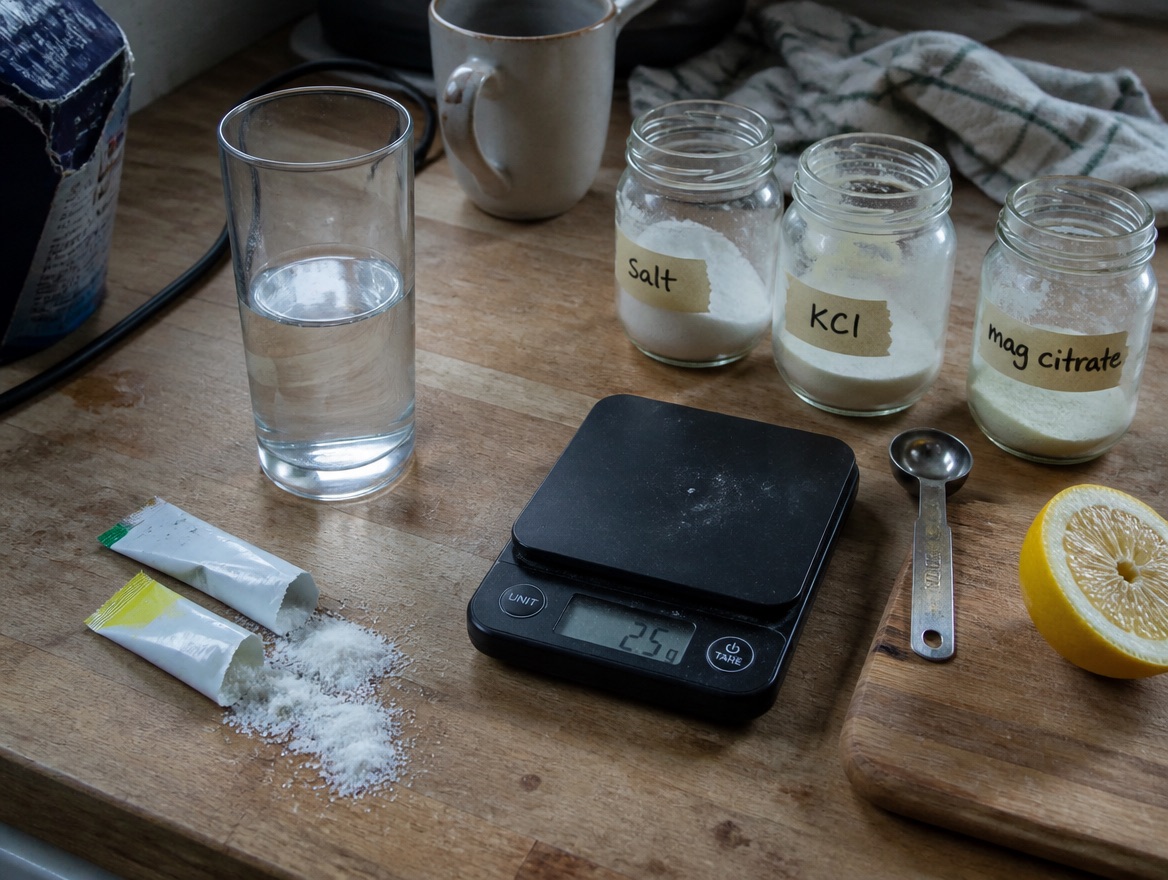
LMNT vs Homemade Electrolytes: A Spec-Sheet Comparison
Side-by-side mineral breakdown — sodium, potassium, magnesium, cost per serving — between a packet mix and a DIY salt-and-citrate blend.

Thirst, Hydration, and Why Your Body Isn't a Bad Gauge
Reassessing the thirst is too late claim with a level head, how thirst regulation works, where the cue can lag, and how to combine it with other signs.

Can You Get Enough Electrolytes Without Any Supplements?
The food-first case for sugar-conscious eaters, food sources that cover the bases, when intake genuinely runs short, and avoiding the over-supplement trap.